


As the global demand for sustainable and nutritious food grows, plant-based proteins have taken center stage. Among the innovators in this space is Happy Plant Protein, a Finnish food-tech startup that is quietly reshaping how plant protein is produced—and potentially how we eat in the future.
What makes Happy Plant Protein stand out?
- Simple production process: Uses a single-step extrusion method instead of complex, multi-stage processing
- Low resource use: Minimal water and energy consumption compared to traditional protein isolation
- No chemicals: Avoids chemical treatments entirely
- Zero waste approach: Efficient use of raw materials with little to no by-products
At its core, Happy Plant Protein is not just another ingredient company. Instead, it focuses on transforming the process of making plant protein. Traditionally, producing protein isolates requires large, expensive facilities, significant amounts of water and energy, and often complex chemical treatments. Happy Plant Protein flips this model on its head with a simple but powerful idea: produce high-quality protein directly from basic ingredients like flour using existing equipment.
Why it matters for the food industry?
- Lower investment barrier: Up to 90% lower cost compared to traditional production methods
- Local production: Enables protein manufacturing close to where crops are grown
- Supports farmers and mills: Opens new revenue streams for local producers
- Stronger supply chains: Reduces reliance on global imports
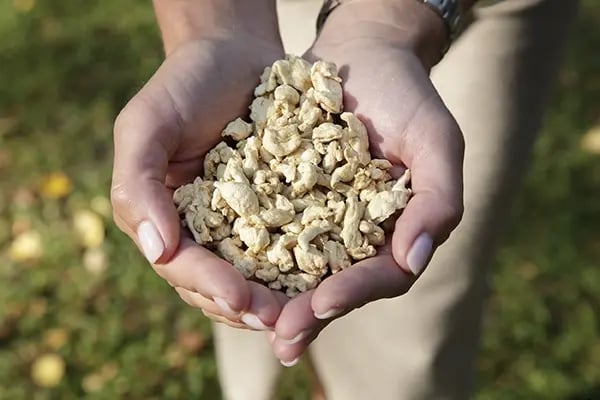
The company’s patented technology uses legumes and grains—such as peas, fava beans, and oats—to create protein-rich ingredients with a neutral taste and strong functionality. This makes them ideal for plant-based foods, including meat alternatives and hybrid products.
The company’s patented technology uses legumes and grains—such as peas, fava beans, and oats—to create protein-rich ingredients with a neutral taste and strong functionality. This makes them ideal for plant-based foods, including meat alternatives and hybrid products.
Looking ahead
- First agriculture-based production facility planned in Latvia
- Scaling decentralized protein production across Europe
- Contributing to a more sustainable and resilient food system
Ultimately, Happy Plant Protein represents a shift in thinking. Rather than chasing increasingly complex solutions, it embraces simplicity: fewer steps, lower costs, and local production. In doing so, it addresses some of the biggest challenges in the food industry—sustainability, affordability, and scalability.
If the future of food is plant-based, companies like Happy Plant Protein are helping ensure that future is not only possible, but practical.